Intersect weekly update #108 April 24, 2026
Welcome to Intersect’s update #108
Over the past two years, Intersect has evolved alongside the needs of the Cardano ecosystem.
What began as a new coordination body has matured into a more focused operational layer, supporting governance, enabling collaboration, and ensuring that critical technical and coordination functions continue to operate reliably in an increasingly decentralized environment.
The Intersect 2026–2027 proposal reflects that shift.
It is more focused, more deliberate, and reduced in size, while preserving the capabilities that matter most: open coordination, technical stewardship, incident response, and the ability to address critical unowned work across the ecosystem.
As Cardano continues toward deeper decentralization, multi-client infrastructure, and growing real-world use, these functions become more, not less, important.
At its core, this proposal is about continuity and confidence: ensuring the ecosystem has the operational backbone required to evolve with resilience, accountability, and clarity.
Today sees the launch of our Budget proposal for 2026-27: Intersect: Governance coordination and technical stewardship for the Cardano ecosystem.
We encourage the community to take the time to review it in full on the end-to-end budget tool, engage with the details, and take part in the discussion that follows. Constructive feedback is a critical part of this process.
More information, including FAQs and supporting materials, will be shared via X, on our Knowledge Base, and we will also host a live X Space on Monday, April 27 at 15:30 UTC with Jack Briggs to walk through the proposal and answer questions from the community.
Contributors: Bosko M, Kevin H, Hard Fork Working Group, Parameter Committee, Intersect Technical Steering Committee
Cardano Upgrades
Progress across node releases and supporting infrastructure continues to track toward the planned hard fork timeline, with key components nearing readiness for Mainnet. Recent updates also highlight important learnings around tooling resilience and upcoming protocol improvements.
The van Rossem upgrade is the doorway to many improvements to come with the next era.
Node v10.7.1: Released as of 20th April, including a fix for the previously observed performance regression related to heap size.
Node v11.0: On track to be mainnet-ready next week; this version is required to execute the hard fork across Preview, PreProd, and Mainnet.
DB-Sync: Version 13.7, compatible with the upgrade, is expected to be mainnet-ready early next week.
Indicative dates: Target submission for the Mainnet hard fork governance action is set for May 28, 2026, with likely enactment in the second half of June.
Plutus cost models: A recent cost model enactment on Preview exposed issues with tooling relying on hardcoded parameters (eg, Blockfrost). Protocol v11 introduces a new predicate failure that returns the expected cost model, enabling DApps to dynamically adjust and improve overall resilience.
Ecosystem readiness is being updated on a daily basis, and you can track it here.
Contributors: Civics committee, Thomas L, Ian H, Intersect, Intersect Steering Committee, Simo S, Intersect
Constitutional Committee elections
We’re now entering the final stretch before candidate registration opens for the Constitutional Committee elections next Friday, May 1. Behind the scenes, a significant amount of work is going into preparing and refining resources, with new material continuously being added to the Knowledge Base to help candidates understand both the role and the expectations.
If you’re considering putting your name forward, this is the moment to start engaging seriously. Take the time to go through the available resources, understand the constitutional framework, and get a feel for the responsibilities the role carries. The weekly AMA sessions are there for exactly this purpose, to ask questions, challenge assumptions, and clarify anything you are unsure about before stepping in.
Also a reminder that we are hosting an X Space today, Friday April 24 at 3:30 PM UTC. We will be joined by both current and former CC members. This is not just a general discussion, it is a chance to hear directly from those who have been in the role, what the work actually looks like in practice, where the challenges are, and what they wish they knew before starting. If you are considering running, this is one of the most valuable opportunities you’ll have to hear first-hand experiences.
This week, the civics committee received an update on the resolution of recent committee election verification bugs and noted that the Constitutional Amendment Process (CAP) tool is nearing readiness for public testing.
Civics Committee updates
A highlight from the weekly Civics call was the inaugural meeting of the Governance Incentives Working Group, which aims to provide a collaborative space for individuals and teams working on incentive mechanisms within Cardano. The goal is to accelerate progress and provide recommendations to the Civics committee on how to properly incentivize governance actors like DReps and CC members while minimizing duplicated effort across the ecosystem. The group meets weekly on Tuesdays at 9:00 AM UTC to connect related initiatives and share knowledge.
This week, the committee also focused on refining the committee’s budget proposal, specifically introducing a resource forecast to ensure the group has the capacity to deliver its 2025/2026 work program. Members are currently working to attach individual names to specific work packages, ensuring clear accountability and a firm commitment to the community for the upcoming year.
Recently closed governance actions
1. Approve Cardano Foundation as New Managing Entity of Project Catalyst
Type: Info Action ℹ️
Expired: 19th Apr 2026 (Epoch 626) 🗓️
Breakdown:
- CC votes: 6 🟢 | 0 🔴 | 1 ⚪️
- DRep votes: 83.42%
- SPO votes: Not counted but the ledger allows a vote (5.66%)
Live governance actions*
1. Pebble + Gerolamo - HLabs 2026 Budget
Type: Treasury Withdrawal 💰
Expires: 29th Apr 2026 (Epoch 628) 🗓️
Progress Report:
- CC votes: 2 🟢 | 1 🔴 | 0 ⚪️ | 4 ⏳
- DRep votes: 47.81% / 67%
Thresholds: 5/7 CC members, 67% DRep active voting stake
More Info: Proposal | Vote Progress
2. Cardano Summit 2026 and TOKEN2049 Singapore
Type: Treasury Withdrawal 💰
Expires: 9th May 2026 (Epoch 630) 🗓️
Progress Report:
- CC votes: 2 🟢 | 1 🔴 | 0 ⚪️ | 4 ⏳
- DRep votes: 8.09% / 67%
Thresholds: 5/7 CC members, 67% DRep active voting stake
More Info: Proposal | Vote Progress
IOG Treasury Withdrawal Proposals
| Proposal | Expires | DRep (67%) | CC (Y-N-A-P) | Links |
| IO: Developer Experience Initiative |
May 24, 2026 |
0.98% | 0-0-0-7 | |
| IO: Cardano Upgrades | May 24, 2026 (Epoch 633) |
0.99% | 0-0-0-7 | |
| IO: Consensus Initiative | May 24, 2026 (Epoch 633) |
0.72% | 0-0-0-7 |
|
| IO & Ensurable Systems: Cardano Maintenance Initiative |
May 24, 2026 (Epoch 633) |
0.65% | 0-0-0-7 |
|
| IO & Midgard Labs: L2 Scalability Initiative |
May 24, 2026 (Epoch 633) |
0.65% | 0-0-0-7 |
|
| IO: Cardano High Assurance Technical Collaboration |
May 24, 2026 (Epoch 633) |
0.57% | 0-0-0-7 |
|
| IO & VacuumLabs: Enhancing Plutus - Performance, Correctness, and Usability |
May 24, 2026 (Epoch 633) |
0.59% | 0-0-0-7 |
|
| Blockfrost: Maintenance and Next Generation Indexing |
May 24, 2026 (Epoch 633) |
0.04% | 0-0-0-7 |
|
| Pogun: Capital Without Compromise |
May 24, 2026 (Epoch 633) |
1.04% | 0-0-0-7 |
|

Contributors: Budget committee, Simo S, Duncan S, Abbie Y, Intersect
Budget process
The 2026 Budget Process is now live and actively underway. The submission window opened on April 16, and proposals are already being submitted and reviewed through the platform, with early feedback and iteration in progress.
The end-to-end budget tool supports the full process in one place — from submission and feedback through to voting — enabling a more structured and transparent experience for all participants. DReps are encouraged to engage early by reviewing proposals and providing feedback, as this is the phase where proposals are shaped and improved ahead of voting.
If you’re planning to submit a proposal, there is still time to participate. We recommend reviewing the process overview, timeline, guides, and FAQs in the Knowledge Base, and preparing to engage with feedback once your proposal is live.
Delivery assurance
This month IOG has announced the cancellation of two projects in their 2025 Core Development Proposal: Acropolis and Tiered Pricing.
The cancellation of Acropolis is part of a strategic pivot to focusing on Chain abstraction and improving the node’s ease of use.
The cancellation of Tiered Pricing is due to changes in transactions under Leios that will render the project obsolete.
Intersect will facilitate the implementation of this decision by canceling the outstanding milestones in the associated smart contracts for Acropolis and Tiered Pricing, which will see a total of 4.1m ada returned to the treasury.
More information on these decisions can be found on IOG’s Changing Course page.
Since August 2025, Intersect has administered 45 vendor contracts, helping to ensure project proposals are turned into real outcomes. As part of our commitment to transparency, we have written a mid-year report covering the progress on all of these projects with direct input from the vendors themselves. Read the report here - Reports | Intersect - Budget Administration Services.

Contributors: Larisa McF, Intersect
Reading the weekly updates, the direction of travel across the ecosystem becomes clear: infrastructure stabilising, participation increasing, and attention shifting toward long-term sustainability.
Progress toward the next upgrade continues to strengthen performance, with tools to ensure resilience, applications and infrastructure that can adapt as the protocol evolves. These are foundational improvements that underpin long-term reliability.
At the same time, governance activity is becoming more visible and more proactive. A growing number of treasury proposals, combined with earlier DRep engagement, signals increasing confidence in the process and a shift toward more collaborative, iterative decision-making.
Ecosystem engagement is also expanding globally, with continued momentum across enterprise, community, and financial use cases, reinforcing Cardano’s role as infrastructure for real-world systems.
We are seeing a noticeable maturity in how change is managed. Adjustments to priorities and resourcing reflect a system that is learning, adapting, and refining as it grows.

Contributors: Abhik N, Intersect, Lara B, Intersect, Ian H, Intersect, Valeria D, Intersect, Ryan W, Intersect
Join us on April 30 at 12:00 PM UTC for our Monthly Members Meet, a new format designed to bring the entire Intersect community closer together. The session will begin with a comprehensive update from Intersect, covering key developments, priorities, and progress across the ecosystem. We’ll then shift the spotlight to the community, with updates from each committee sharing what’s been happening, what they’re working on, and where you can get involved. To wrap things up, everyone will move into the Virtual Hub for more interactive discussions, networking, and deeper engagement. Don’t miss it— tune in live here:
https://www.youtube.com/live/TKRLECshjgs?si=0j4v_4CmnPLAmBal
Money 20/20 - Bangkok Thailand

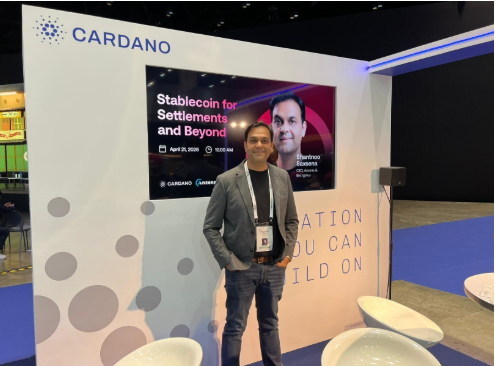
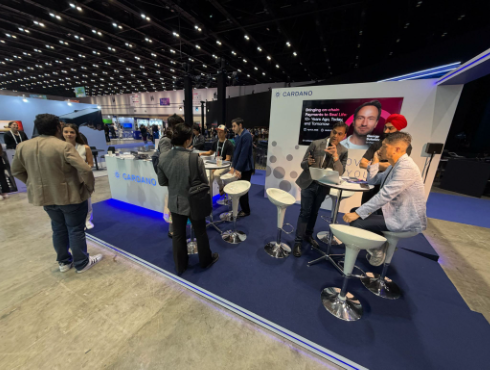
This week, Intersect was present at the Cardano booth at Money20/20 Bangkok, engaging directly with a wide range of enterprises across the fintech landscape. The event created strong momentum for meaningful conversations around real-world adoption, institutional infrastructure, and how Cardano is positioning itself at the intersection of traditional finance and emerging decentralized systems.
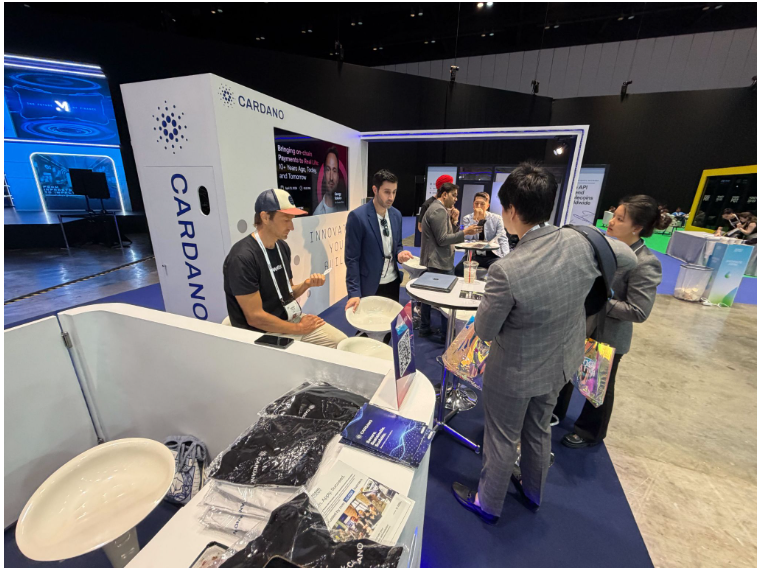
During the event, EMURGO COO, Nikhil Joshi introduced SecondFi - a self-custody neofinance platform built around five core financial needs: spending, sending, staking, swapping, and saving. All of this is brought together into a single, seamless app where users remain in full control of their funds at every step. Catch the whole recording:
https://youtu.be/_KcgvlIAPFU?si=6bNEWoO64ZjtiGul
A special moment was hearing from Natcha Chaiprasit of Storm Partners, an Intersect enterprise member, who shared updates on their latest work and how they are supporting the ecosystem through legal and strategic advice.
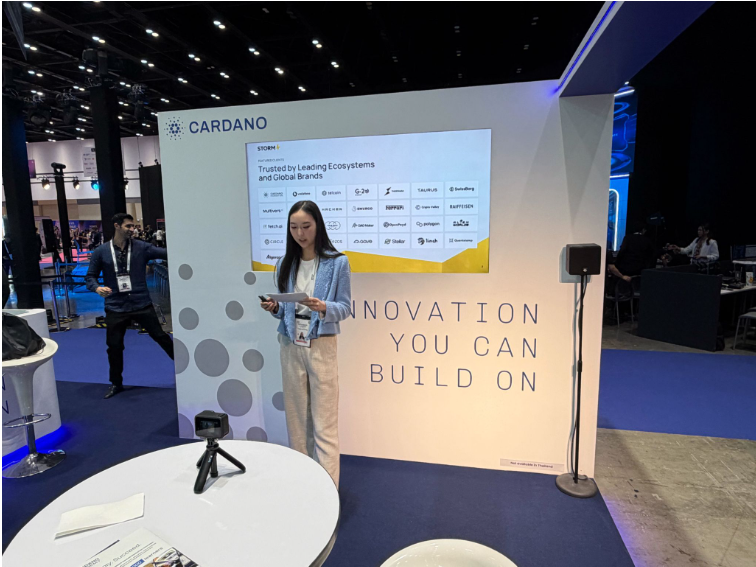
We were joined by Anzens, Wirex, SecondSwap, and many more, strengthening connections across the ecosystem and beyond.
Intersect’s 2026 Budget Roundtable - Tech 4 Impact Tokyo
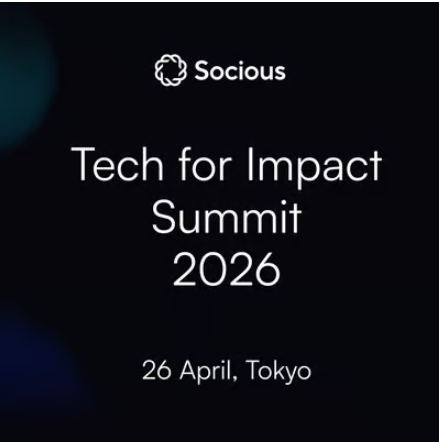
Alongside Tech 4 Impact, Intersect will be hosting a bilingual 2026 Budget Roundtable during the Tech 4 Impact Summit in Tokyo on Sunday, April 26, 2026.
Facilitated both in Japanese and English by our Executive Director, Jack Briggs, and Fred Tanaka, this roundtable will focus on the 2026 budget process and open the floor for attendees to share their feedback on what is working, what isn’t, and what would make Cardano governance participation easier.
This session will be hosted in partnership with Socious, one of our enterprise members, as part of the broader Tech 4 Impact Summit program.
Register for the Tech 4 Impact Summit today: https://luma.com/wdw53mzh
Intersect Committee elections 2026
With the Intersect Committee elections voting ongoing until May 1 2026 at 1200 UTC, a reminder that you can find all the relevant Committee X accounts here:
Budget, Civics, Growth & Marketing, Membership & Community, Open Source, Product, Technical Steering
What’s on next week:
Intersect Committee elections 2026
Subscribe to the Luma calendar
- X Space: Intersect Committee Elections '26: Meet the Candidates #2
Tuesday, April 28 2026 at 1530 UTC - Virtual Hub: Meet the Candidates
Thursday, April 30 2026 at 1400 UTC
How to join the Virtual Hub guide on X
Constitutional Committee elections 2026
X Space: 2026 CC Elections - #1 The Role of the Constitutional Committee
(Today) Friday, April 24 2026 at 1530 UTC
van Rossem hard fork
“Inside the van Rossem Upgrade: Weekly Community Q&A” X Space hosted by Intersect Technical Steering Committee
Thursday, April 30 2026 at 1430 UTC | Luma calendar
Enterprise Spotlight: Well-Typed
Well-Typed provides expert consulting across the Haskell ecosystem, bringing together a globally distributed team of highly experienced specialists dedicated to advancing both the commercial and academic use of the language.
Their clients span a wide range of industries, alongside academic institutions working at the forefront of computer science research. Services include Haskell software development, consulting and code review, testing, performance optimization, open-source development and maintenance, as well as training.
Operating fully remotely, Well-Typed supports clients worldwide while maintaining a tailored, hands-on approach for each project. The team emphasizes flexibility, adapting to the specific needs of every engagement.
Beyond client work, Well-Typed has been actively involved in the broader Haskell community—contributing to initiatives such as the Haskell language specification, the Haskell Platform committee, and the haskell.org committee, as well as helping establish the Industrial Haskell Group. They also support and participate in hackathons like MuniHac and ZuriHac, and have mentored students through programs including the Summer of Haskell and Google Summer of Code.
The company is also a founding sponsor of the Haskell Foundation and regularly shares insights through its ecosystem activity reports and blog.
With its strong technical foundation and community-driven approach, Well-Typed continues to play a meaningful role in the evolution of the Haskell ecosystem and its real-world applications.
That’s it for this week’s update. Thank you for reading. To learn more about Intersect’s work, explore our Knowledge Base, which provides detailed information on governance structures, committees, and funding.
Join the conversation on Discord, and follow us on Twitter (X) and LinkedIn to engage with fellow members, working groups, and the broader community.
Your voice helps shape the future of Cardano governance.