Intersect weekly update #115 June 12, 2026
Welcome to Intersect update #115
This week, Cardano governance and technical development moved in lockstep. The van Rossem hard fork reached Preprod, the 2026 budget process concluded its voting phase with record DRep participation, the Constitutional Committee election entered its final weeks, and an Intersect team member returned from Norway's largest technology festival with a clear message: the problems Cardano is built to solve are exactly the ones the world is starting to ask about.
 Contributors: Bosko M, Ryan, Intersect
Cardano upgrades
Momentum toward the van Rossem upgrade continues building as we move from preparation to ecosystem validation. With the hard fork now successfully enacted on Preprod and adoption of node v11.0.1 accelerating across the network, attention must now focus on ecosystem readiness ahead of the Mainnet go/no-go decision on June 15.
Ongoing testing by stake pool operators, exchanges, wallets, DApps, infrastructure providers, and tooling teams is a critical part of the process, helping ensure any remaining issues are identified and addressed before Mainnet progression is considered.
Node v11.0.1 and ecosystem adoption: Adoption of node v11.0.1 continues to increase steadily across the ecosystem. According to PoolTool, 52% of nodes are now self-reporting v11, while 76% of block production in the current mainnet epoch is occurring on protocol version 11. Cexplorer reports that more than 84% of blocks produced over the last five days were created by v11 nodes, indicating strong ecosystem migration toward van Rossem readiness.
DB-Sync, Ogmios & Kupo: The working group reaffirmed that there are two viable paths for Ogmios and Kupo to support van Rossem readiness. Ecosystem participants can continue using the Intersect-maintained forks (Ogmios v6.14.0.2 and Kupo v2.11.0.1), which remain a supported and IOG-maintained option while upstream-compatible releases are being pursued. Additionally, a CPU overspend issue reported by Indigo was investigated and determined to be caused by an older Lucid version using hardcoded values, with no underlying node or hard fork issue identified.
Timeline: Following successful enactment of the van Rossem hard fork on Preprod on June 10, focus now shifts to the Mainnet go/no-go decision scheduled for June 15. Technical Steering Committee and Civics Committee reviews are supporting submission readiness, with governance action metadata being finalized and potential security audit references under consideration ahead of any Mainnet submission.
Readiness tracker: The readiness tracker was updated to include a dedicated Mainnet submission readiness checklist, with readiness percentages now derived from critical-path items required for Mainnet progression. Several light wallets and ecosystem tools have achieved readiness status, exchange readiness continues to improve rapidly, and further refinements are planned to weight exchange readiness according to relative liquidity contribution.
Plutus cost models: The Mainnet Plutus cost model protocol parameter update governance action, submitted on May 26, continues to gain support and currently stands at approximately 55% approval. Current expectations are that the action will achieve ratification and proceed to enactment within the next several weeks.
In Memory of Max van Rossem: “...On January 11 2026, after Max's passing, his son Max Louis Hans van Rossem was born. He will grow up in a world where the blockchain his father helped shape carries his family name, a hard fork named not for a product or a protocol milestone, but for a human being who gave his time, his mind, and his heart to a decentralised future he believed in…”
 Contributors: Civics committee, Ian H, Intersect, Intersect Steering Committee, Simo S, Intersect
Constitutional Committee elections 2026 update
As of today, four candidates have registered for the 2026 Constitutional Committee (CC) election being facilitated by Intersect.
This election aims to fill the four Constitutional Committee seats that will become vacant when the current terms expire in September. While there is still time for additional candidates to come forward, currently, the number of candidates matches the number of available seats.
The CC election is designed to allow DReps to choose among candidates, and to help establish confidence in those who will ultimately be trusted with Constitutional responsibilities. A competitive election provides choice and signals community support. If no additional candidates register before the June 21 deadline, the four registered candidates would advance unopposed, removing the need for DRep voting to determine the outcome.
While this would fill the available seats, it could create challenges for the next step of the process. The election outcome must ultimately be reflected in an on-chain Update Committee governance action; without a meaningful election to demonstrate support and legitimacy, the action may struggle to achieve ratification.
This is particularly important because maintaining a fully functioning CC is essential to the operation of Cardano governance. If vacant seats aren’t replaced, the Constitutional Committee would fall below the minimum size required to perform its constitutional duties, creating challenges for future actions that depend on its participation. There is still time for additional candidates to step forward. A broader candidate field creates meaningful choice for DReps, strengthens the legitimacy of the election outcome, and increases confidence that the next phase of the process can proceed smoothly.
If you believe you can contribute to this important committee, candidate registration remains open until June 21 - register today.
Constitutional Amendments Process moves to public testing
The Civics Committee has approved the next phase of the Constitutional Amendment Process (CAP), moving from closed working group to planned public testing. More information about when public testing begins and how to contribute will be shared soon.
What is the Constitutional Amendment Process?
The Constitutional Amendment Process is a proposed framework for how the Cardano community can develop, discuss, refine, and ultimately submit amendments to the Cardano Constitution. Its goal is to provide a clear, transparent, and accessible pathway from community idea to on-chain governance action.
Following a review period, a proposal can move in one of three directions. It can be marked as ready for on-chain submission, withdrawn by the author, or amended for further discussion based on the feedback received. From there, authors and the community consider whether proposals should be bundled together or submitted individually. This matters because some amendments may naturally belong together, while others may need to stand on their own.
Once that has been decided, the final proposal or set of proposals would proceed as an on-chain governance action to update the Cardano Constitution.
Public testing allows the wider community to explore the process, identify improvements, and help shape how future constitutional amendments are developed and considered.
Community participation is encouraged. This working group currently meets every Thursday at 09:00 UTC and continues discussions asynchronously in the Intersect Discord server. Anyone interested in helping shape this work is welcome to get involved.
Recently closed governance actions
|
Proposal |
Status |
DRep (67%) |
CC (🟢-🔴-⚪️-⏳) |
Links |
|
The first node in the browser; a Cardano USP |
Expired |
50.05% |
7-0-0-0 |
|
|
Cardano Vision 2026: Human Centred, Scalable, Post Quantum Secure - IO Research |
Ratified |
74.96% |
7-0-0-0 |
Live governance actions*
|
Proposal |
Expires |
DRep (67%) |
CC (🟢-🔴-⚪️-⏳) |
Links |
|
Cardano dOSPO and OMF Program |
June 13, 2026 (Epoch 637) |
1.83% |
1-2-0-4 |
|
|
Scalus: Cardano’s Application Platform for Building, Launching, and Scaling |
June 13, 2026 (Epoch 637) |
5.84% |
3-0-0-4 |
|
|
Eternl: Path to Sustainability (2026-2027) |
June 18, 2026 (Epoch 638) |
28.69% |
2-1-0-4 |
|
|
Cardano Critical Integrations V2 |
June 23, 2026 (Epoch 639) |
59.88% |
2-0-0-5 |
|
|
5am.earth Trust Layer Targeting Vision 2030 KPIs |
June 23, 2026 (Epoch 639) |
13.19% |
3-0-0-4 |
|
|
Update Plutus Cost Models (Parameter Update) |
June 28, 2026 (Epoch 640) |
54.54% |
3-0-0-4 |
|
|
Rare Evo and Dev Gov Day 2026: Cardano Title Sponsorship |
June 28, 2026 (Epoch 640) |
5.55% |
1-1-0-5 |
|
|
Tweag Core Cardano Infrastructure: Treasury Withdrawal 2026–2027 |
July 3, 2026 (Epoch 641) |
28.32% |
2-0-0-5 |
|
|
Reduce the committeeMinSize parameter from 7 to 5 (Parameter Update) |
8th Jul 2026 (Epoch 642) |
19.25% |
1-0-0-6 |
|
|
IO: Hydra |
8th Jul 2026 (Epoch 642) |
16.72% |
0-0-0-0 |
|
|
Reforming Treasury Governance (Info Action) |
13th Jul 2026 (Epoch 643) |
0.63% |
0-0-0-0 |
|
|
Reimburse Ikigai Info Governance Action Deposit. |
13th Jul 2026 (Epoch 643) |
11.13% |
0-0-0-0 |
*data from 2026-06-10 at 1345 UTC
 Contributors: Simo S, Budget committee
2026 Budget Process Update – Hydra Voting Complete
The Hydra Voting phase of the 2026 Budget Process has now concluded.
A huge thank you to all DReps, proposers, community members, and contributors who participated throughout the process. From proposal development and community feedback through to voting, the level of engagement exceeded expectations and demonstrated the continued growth of Cardano governance.
Voting Participation Highlights
- More than 5 billion ada of voting power participated in the ballot, representing approximately 85% of the total active DRep stake (~5.85 billion ada).
- Over 100 DReps took part in the voting process.
- Participation levels significantly exceeded those seen during the 2025 budget cycle.
- Community engagement remained strong throughout both the review phase and voting period.
These participation levels represent an exceptional level of engagement and reflect the community's commitment to shaping the future of the Cardano ecosystem through open and transparent governance. Reaching approximately 85% of active DRep stake participation demonstrates strong ecosystem interest in the 2026 budget process and provides a high degree of legitimacy to the outcomes of the Hydra voting phase.
What Happens Next?
The process now moves into the Voting Audit phase, where the results will be independently reviewed and validated.
Following completion of the audit:
- Final audited results will be published.
- Proposals that meet the required thresholds will proceed to consolidation.
- Treasury Withdrawal Governance Actions will be prepared for on-chain submission.
We’ll also work as quickly as possible to move successful proposals through the remaining stages of the process and submit them on-chain.
Thank You
We would like to thank everyone who contributed their time, expertise, feedback, and participation throughout this year's process.
Whether you submitted a proposal, provided feedback, voted as a DRep, promoted discussion, or helped improve proposals through community engagement, your participation has helped make this process possible.
Further updates will be shared as the audit process progresses and final results become available.
 Contributors: Larisa M, Thomas L, Intersect
Across Intersect committees, attention is beginning to shift toward Q3 planning and prioritisation. All Committees will shortly begin formally reviewing ongoing workstreams, identifying emerging priorities, and considering where community needs and available capacity align. One of the ongoing challenges committees manage is balancing responsiveness to new opportunities while maintaining focus on long-term strategic work.
Upcoming committee planning sessions will provide an opportunity to reflect on what's working, what needs adjustment, and where effort can create the greatest value for the ecosystem. The outcomes will be published and shared in upcoming Intersect Connect sessions - full details to follow next week.
Recent discussion around the recent committeeMinSize governance action (proposing a reduction of the Constitutional Committee minimum size parameter from seven members to five) has prompted useful community discussion.
It’s important to clarify that the proposal itself is not intended to reduce or weaken governance safeguards provided by our Constitutional Committee. Rather, it seeks to provide additional operational resilience should vacancies arise, helping ensure the Constitutional Committee remains capable of functioning while replacement processes are completed.
As governance systems mature, discussions increasingly focus not only on ideal operating conditions, but on how the system continues to function effectively when faced with unexpected circumstances.
Kongsberg Agenda 2026 Through a Cardano Lens
Perspective: Lessons from Norway
Returning from Kongsberg Agenda, Norway's largest technology festival, Thomas Lindseth, (Intersect), noted that many discussions at the event focused on trust, data integrity, privacy, accountability, and coordination between organisations.
"Nobody was asking for a blockchain. They were asking how to verify information, how to share data securely, how to build trust between parties, and how to create systems that remain resilient over time."
The reflection was that many of the challenges being discussed are already being addressed by projects across the Cardano ecosystem, highlighting an ongoing opportunity to better communicate existing solutions to wider audiences.
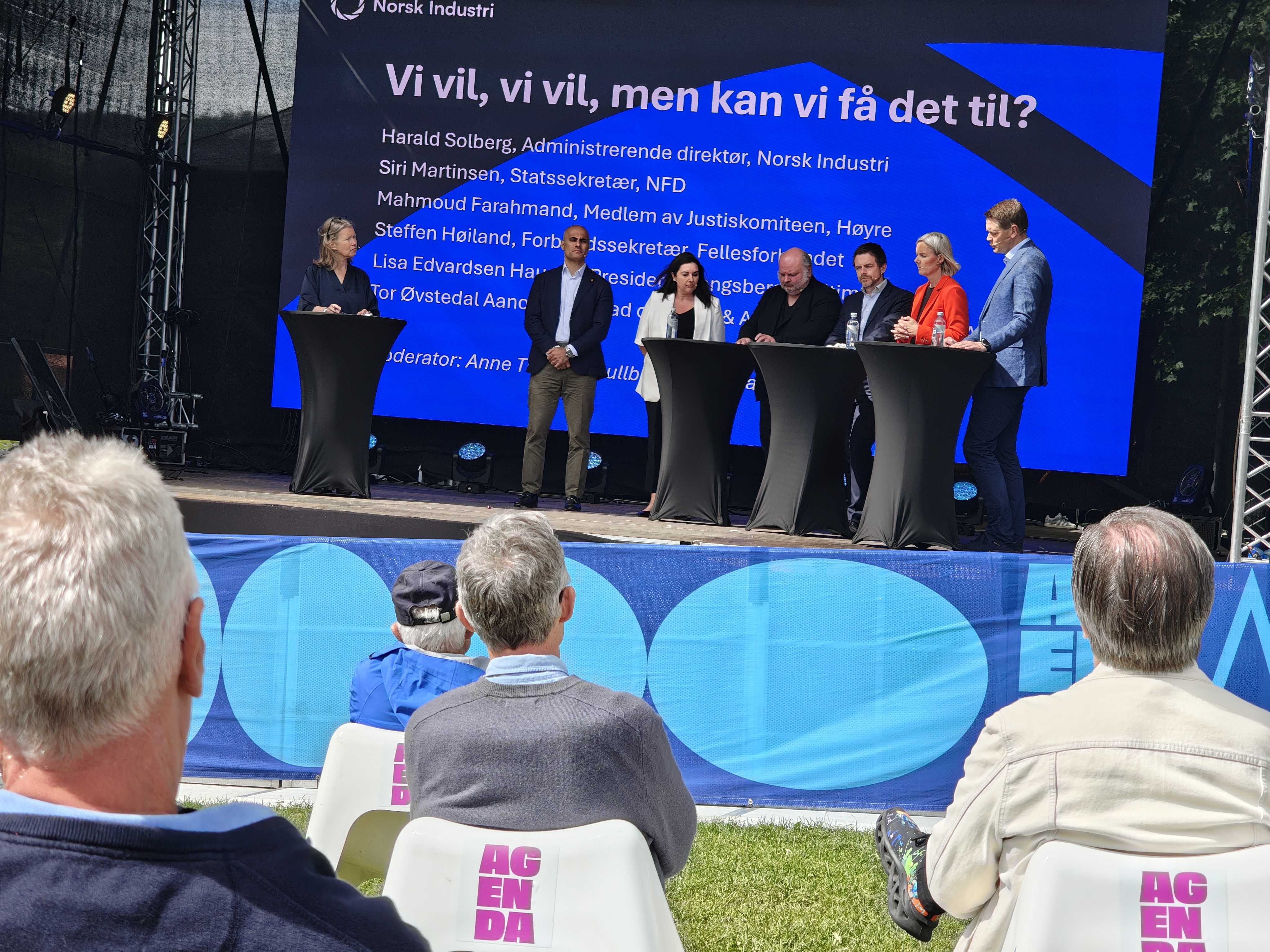
Each of the themes had a parallel within the Cardano ecosystem. Discussions about trusted cloud infrastructure, data sovereignty, and AI bring to mind projects like Iagon. Privacy, sensitive data, and secure collaboration between organizations are appropriate to Midnight and its ability to enable selective disclosure without exposing underlying data. Transparency, auditability, and governance are relevant to Cardano's on-chain governance system, DReps, and the Constitutional Committee.
Many of the problems being discussed at Kongsberg Agenda already have potential solutions within the Cardano ecosystem. The challenge is making sure the right people know they exist.
More than ever, Cardano has a role to play in the technological future, because trusted systems, resilient infrastructure, privacy-preserving technology, verifiable data, and effective governance are needed, and those are exactly the problems Cardano is built to solve.

Contributors: Ian H, Intersect.
What’s on next week
Constitutional Committee elections 2026
There are regular CC Election Process AMA sessions scheduled every Tuesday throughout the CC election period. Times alternate weekly to accommodate different time zones. These sessions are open for anyone with questions about the role or needs help with technical resources.
Next session: June 16, 2026 between 1500-1600 UTC
Subscribe to the Luma Calendar
Intersect Virtual Hub
Reminder that the Intersect Virtual Hub is open 24/7 for members to use and organize their own meetings and events. If you would like to utilize the screen sharing features for presentations, an Intersect staff moderator can assist.
How to join the Virtual Hub guide on X
van Rossem hard fork
Now that progress towards the hard fork is in full swing, the Hard Fork Working Group meets every Tuesday and Thursday. Subscribe to the Luma calendar.
That’s it for this week’s update. Thank you for reading. To learn more about Intersect’s work, explore our Knowledge Base, which provides detailed information on governance structures, committees, and funding.
Join the conversation on Discord, and follow us on Twitter (X) and LinkedIn to engage with fellow members, working groups, and the broader community. Subscribe to the public Google and Luma calendars.