Intersect weekly update #122 July 31, 2026
Welcome to Intersect update #122.
Just one week across Cardano has brought progress in protocol development, governance, community tooling, and technical delivery. With attention turning from van Rossem to the Dijkstra era, a new parameter update action is now open for voting, the Constitutional Committee election has moved on-chain, and the Constitutional Amendment Portal has opened for community alpha testing.
We also reflect on conversations from Rare Evo, celebrate the completion of Eryx’s ZK Bridge project, spotlight enterprise member Tweag, and share the latest from across Intersect and the ecosystem.
Contributors: Bosko M, Ian H, Larisa M, Thomas L, Duncan S, Abhik N, Valeria D, Lorenzo B, Intersect
Latest on Cardano upgrades
With the van Rossem upgrade complete, the Hard Fork Working Group is now shifting focus toward the Dijkstra era and the next phase of Cardano’s technical evolution.
The initial Dijkstra rollout is expected to take place across a few phases, introducing Nested Transactions, Linear Leios, and Peras. Following presentation to the Intersect Technical Steering Committee on July 29, the scope of the first hard fork is expected to be finalized today, July 31.
The Haskell node team’s current objective is to deliver the first two phases, Nested Transactions and Linear Leios, to mainnet by the end of 2026, enabling an incremental rollout of key Dijkstra capabilities. Any constitutional updates required for the Dijkstra era are expected to follow the hard fork’s enactment, although community discussion will begin as early as practical to allow sufficient time for feedback.
Work is also continuing to define a meaningful process through which the community can help shape the scope of future hard forks beyond the initial Dijkstra release. This includes collaboration between Product Committee representatives and contributors from across the ecosystem.
Following an earlier working group decision, the current intention is to name the next hard fork after Alexander Esgen, with an In Memoriam section included in the governance action metadata to recognize other recently departed Cardano community contributors. The group also acknowledged the existing on-chain Info action proposing that the hard fork be named after Fabian von Bergen, and community feedback is welcomed.
With the initial scope nearing agreement, the working group will move from twice-weekly meetings to a weekly cadence as activity transitions from the van Rossem rollout to longer-term Dijkstra planning.
New parameter update action submitted on-chain
On behalf of the Parameter Committee, and following Technical Steering Committee endorsement, Intersect has submitted a new Parameter Update governance action combining two previously recommended changes:
- Reducing minPoolCost from 170 ada to 75 ada
- Completing the planned 25% increase to the Plutus transaction and block memory limits.
The reduction in minPoolCost is intended to ease the fixed-fee burden on smaller stake pools. As reserve-funded block rewards decline, the existing flat fee accounts for a growing proportion of a small pool’s rewards, making those pools less attractive to delegators. Lowering it to 75 ada could provide more flexibility while longer-term approaches to Cardano’s incentive structure continue to be researched.
The proposed Plutus changes would raise maxTxExecutionUnits[memory] to 17.5 million units and maxBlockExecutionUnits[memory] to 77.5 million units, completing a cumulative 25% increase from the original limits of 14 million and 62 million units, respectively. The constitutional guardrail MTEU-M-04 caps how much these parameters can change within a single epoch, so the increase was split into two steps: an initial rise to 16.5 million and 72 million units in February 2026, followed by this proposed action to reach the full 25% target. The additional capacity is intended to reduce optimization and deployment constraints experienced by smart contract developers, while preserving the number of maximally sized transactions that can fit within a block.
The action has now been submitted on-chain and is open for voting. As it includes parameters within the Network group, it requires approval from both DReps and stake pool operators:
* 67% of active DRep voting stake
* 51% of active SPO voting stake.
This is therefore one of the governance action types in which SPO participation is required. Stake pool operators and DReps are encouraged to review the proposed changes and supporting rationale before casting a Yes, No, or Abstain vote.
**Transaction ID:** `ab474223d40e2e3540555364be27e161a809c33651408f43d84acff10c0ba306`
View the governance action on GovTool
Constitutional Committee election 2026 update
The 2026 Constitutional Committee election has now concluded.
Following the close of voting, an independent audit was completed to verify the integrity of the election and confirm the final outcome. The audited results have now been published, and the governance action to appoint the successful candidates has been submitted on-chain.
A total of 38 DReps participated in the election, representing 2.332 billion ada in delegated voting power.
The four candidates elected by the DReps are:
- Philip DiSarro, receiving 1.979 billion ada in voting power, representing 84.86% of participating voting power.
- Leandros BSP, receiving 1.965 billion ada in voting power, representing 84.26% of participating voting power.
- Marek Mahut, receiving 1.370 billion ada in voting power, representing 58.75% of participating voting power.
- Cardano Curia, receiving 1.289 billion ada in voting power, representing 55.26% of participating voting power.
The remaining candidates finished in the following order: Asia Africa Cardano Coalition (AACC) with 1.143 billion ada (48.99%), Bosco Ribeiro with 197.4 million ada (8.47%), Gbiri Oluwaseun (Olokoji) with 121.2 million ada (5.20%), NexTrium Global Innovations Ltd with 34.3 million ada (1.47%), Ian Njuguna with 1.32 million ada (0.06%), and Meek Owen, who did not receive any votes.
The governance action will now proceed through Cardano's on-chain governance process. If the action is ratified, the newly elected members will replace the Constitutional Committee members whose terms expire in September, ensuring continuity of one of Cardano's key governance institutions.
Intersect thanks every candidate who stood for election, every DRep who took part in the vote, and everyone across the ecosystem who helped promote participation throughout the election.
Introducing the Constitutional Amendment Portal, now open for alpha testing
The Cardano Constitution sets out the shared principles and rules that guide on-chain governance. But a constitution only works if the community it serves can easily engage with it: read it, question it, and help shape how it evolves. Until now, there hasn't been a clear way to do that.
The Constitutional Amendment Portal (CAP Portal) is now live for alpha testing at cap.intersectmbo.org.
What is it?
The CAP Portal is a purpose-built home for proposing and discussing changes to the Cardano Constitution. It brings the full text of the Constitution together with the tools to act on it, so anyone in the community can move from ‘I think this should change’ to a clear, well-structured proposal the whole ecosystem can review.
Sign in with any CIP-30-compatible Cardano wallet. There's no account to create and no password to remember. The stake address of the wallet is the user’s identity.
Until now, there hasn't been a clear, defined way to amend the Cardano Constitution. People across the community have raised ideas for changes and talked about what they'd like to see, but with no established process, there was often no obvious place to begin, and good ideas stalled before they ever became concrete proposals.
The CAP Portal exists to fill that gap. It gives constitutional change a real starting point: a place where anyone can turn an idea into a structured, reviewable proposal, share it openly, and move it forward with the rest of the community.
What users can do with it
- Read the Constitution in full, article by article.
- Propose an amendment (a CAP). Highlight the exact passage to change, choose whether to replace the wording or add new text after it, explain reasoning, and submit. A step-by-step form previews exactly how the proposal will look once published.
- Raise an issue (a CIS). Not ready to propose specific wording? File a Constitutional Issue Statement to flag a problem or ambiguity and open it for discussion.
- Discuss and track. Every proposal is public and open for consultation. Comment, follow the conversation, and watch each proposal move through its lifecycle.
It's an alpha, please give us feedback!
This is an early release, opened up so the community can help shape it. Try it out, submit a test proposal, join a discussion, and tell Intersect what works and what doesn't. Feedback in these early days will directly influence how the portal grows.
Get started: head to cap.intersectmbo.org, connect a wallet, and take a look around.
Recently closed governance actions
|
Proposal |
Status |
DRep |
CC (🟢-🔴-⚪️-⏳) |
|
Ratified |
74.34% / 67% |
6-1-0-0 |
|
|
Withdraw 1,193,000 ada for Intersect Technical Steering Committee Support |
Ratified |
72.83% / 67% |
5-1-0-1 |
|
Withdraw 25,400,000 ada for Intersect: Governance coordination and technical ... |
Ratified |
75.69% / 67% |
5-1-0-1 |
|
Ratified |
79.31% / 67% |
6-1-0-0 |
|
|
Withdraw 1,162,746 ada for MLabs Core Tool Maintenance & Enhancement: Plutarc... |
Ratified |
72.2% / 67% |
5-1-0-1 |
|
Alchemy by Sundial x Charms: Cardano-Native Bitcoin Treasury Protocol |
Expired |
5.31% / 67% |
3-1-0-3 |
|
Expired |
11.02% / 67% |
3-3-0-1 |
|
|
Withdraw 4,969,231 ada for Cardano Enterprise Adoption: Ticketing Platform |
Expired |
38.38% / 67% |
6-0-0-1 |
|
Se7en Labs: Daedalus Wallet Maintenance and Improvements 2026-2027 |
Ratified |
77.06% / 67% |
6-0-0-1 |
|
Expired |
43.29% / 67% |
6-0-0-1 |
Live governance actions*
|
Proposal |
Expires |
DRep |
CC (🟢-🔴-⚪️-⏳) |
|
Scalus 2026: Maintenance, Dijkstra Readiness, Interoperability & Application Runtime |
Aug 2, 2026 (Epoch 647) |
27.41% / 67% |
3-0-0-4 |
|
Global Order Book connect Cardano DeFi to increase transaction |
Aug 2, 2026 (Epoch 647) |
15.33% / 67% |
2-1-0-4 |
|
Aug 2, 2026 (Epoch 647) |
DRep 45.84% SPO** 2.27% |
3-1-0-4 |
|
|
Bifrost: Unlocking Bitcoin DeFi on Cardano — Road to Mainnet (Phase 1 of 2) |
Aug 2, 2026 (Epoch 647) |
26.69% / 67% |
2-0-0-5 |
|
Aug 7, 2026 (Epoch 648) |
2.23% / 67% |
2-0-0-5 |
|
|
Aug 2, 2026 (Epoch 647) |
36.29% / 67% |
3-0-0-4 |
|
|
Aug 22, 2026 (Epoch 651) |
DRep 22.86% SPO 0.93% |
0-0-1-6 |
*data from 2026-07-31 at 02:00 UTC
** SPO votes not counted for NCL outcomes but the ledger allows SPOs to vote on Info Actions
Follow vote progress with your favorite Cardano explorers:
GovTool | Tempo | Cexplorer | AdaStat | CardanoScan | CGov | Civitas

Project completion: Cooperativa de Trabajo Eryx - ZK Bridge
This week saw the completion of the zero-knowledge (ZK) bridge project by the Cooperativa de Trabajo Eryx team with the submission for “Milestone 6 - Bridge smart contract in Aiken for verifying the ZK proof”, which consists of adapting the bridge smart contracts so they can verify all the required ZK proofs.
The main challenge of this milestone was verifying a Halo2 proof generated from the Mithril circuit while staying within Cardano’s execution unit, memory, and transaction size limits. The final bridge flow is described in the project documentation, as well as how other challenges encountered were dealt with along the way.
This project is a proof of concept for a ZK bridge from Cardano to an isomorphic chain, with all smart contracts written in Aiken. It uses Mithril to obtain proof that a transaction is present on Cardano.
With this final milestone, the ZK Bridge project is now complete. Beyond the proof of concept itself, the team believes one of the main outcomes of this work is the public knowledge generated around how to design and implement a ZK bridge on Cardano. All the research, technical decisions, limitations, trade-offs, and implementation details have been documented so that other teams in the ecosystem can build on this work, reuse what is useful, and better understand the challenges involved in bringing zero-knowledge-based interoperability to Cardano.
All code for the project can be found in the ZK Bridge GitHub repository.
You can follow the project and access all resources through Eryx’s X account, @eryxcoop, their website, or their original funding proposal.

Connecting with the community at Rare Evo
Members of the Intersect team joined this year’s Rare Evo in Las Vegas, meeting builders, Cardano community members, and people from across the wider blockchain ecosystem.
The event reinforced how meeting in person remains as important as ever. Conversations at the Intersect booth gave people space to ask direct questions, learn more about Cardano, and explore the many meaningful ways to participate - from governance and technical contribution to working groups, committees, and Intersect membership.
During the first day, Chair of Intersect’s Civics Committee Nicolas Cerny presented a Constitutional Amendment Process demo of the portal, showing how community members can suggest changes, report constitutional issues, and develop complete amendment proposals. It was great to begin to take the process out into the community, hear questions, and begin building wider awareness ahead of constitutional changes expected as Cardano moves toward the Dijkstra era.
Thank you to everyone who stopped by, shared feedback, or simply came to say hello. These face-to-face conversations help shape Intersect’s work and reflect the extent to which Cardano’s strength continues to come from the people who choose to participate.
Easter egg: DM 'CAP-tain on deck' to Larisa to claim your prize.
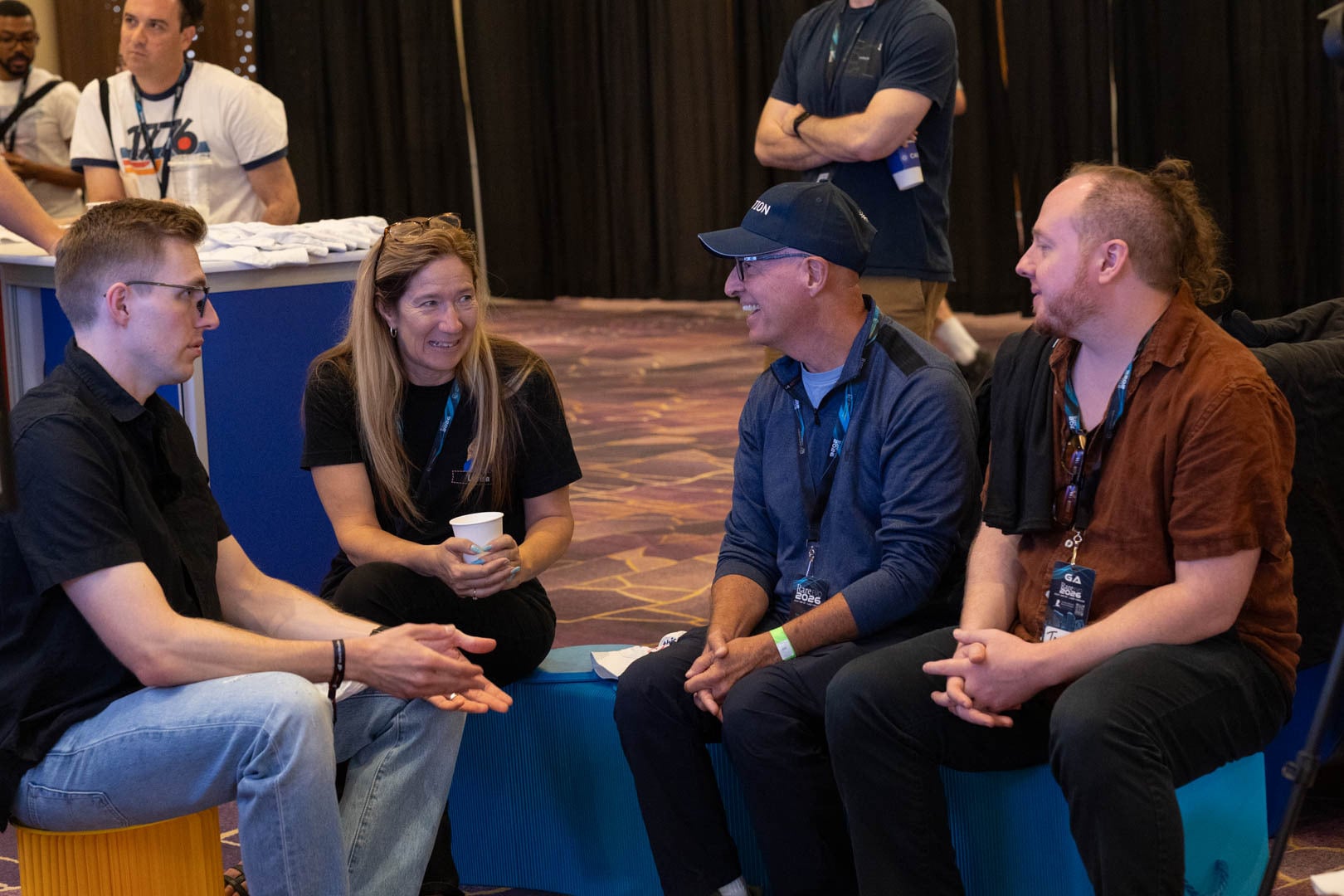
Nico, Larisa, and community members discussing how they can get involved with Constitutional amendments at this years' Rare Evo above.

Bylaws voting update
Voting on the proposed updates to the Intersect Bylaws officially closed today, July 31, at 12:00 PM UTC. Thank you to everyone who took the time to review the proposed changes and participate in the vote. A total of 47 Individual Members cast their vote, helping shape the future of Intersect's governance.
Over the weekend, the DQuadrant team will conduct an independent audit of the voting process to ensure its integrity and accuracy. The official voting results will be published on Monday, August 3, at 12:00 PM UTC.
.png)
Enterprise member spotlight: Tweag
Our latest enterprise member spotlight features Tweag, who have recently published a retrospective reflecting on their last five years of auditing smart contracts across the Cardano ecosystem.
The article explores how Tweag’s auditing methods and tools have evolved since 2021, alongside changes to Cardano’s smart contract languages and capabilities. Drawing on more than 20 audits, it shares recurring findings, lessons learned, and Tweag’s perspective on how smart contract security is changing as Cardano approaches the Dijkstra era.
Read Tweag’s five-year Cardano smart-contract audit retrospective
What’s on next week
DRep monthly call #2
Wednesday, August 5, 2026 4 PM UTC
Register here: https://luma.com/opyxlsfs
Intersect All Hands quiz - Answer

Intersect's "must have" T-shirt designs, being made live at the booth proved popular as always - show us yours!
That’s it for this week’s update. Thank you for reading. To learn more about Intersect’s work, explore the Knowledge Base, which provides detailed information on governance structures, committees, and funding.
Join the conversation on Discord, and follow us on Twitter (X) and LinkedIn to engage with fellow members, working groups, and the broader community. Subscribe to the public Google and Luma calendars.